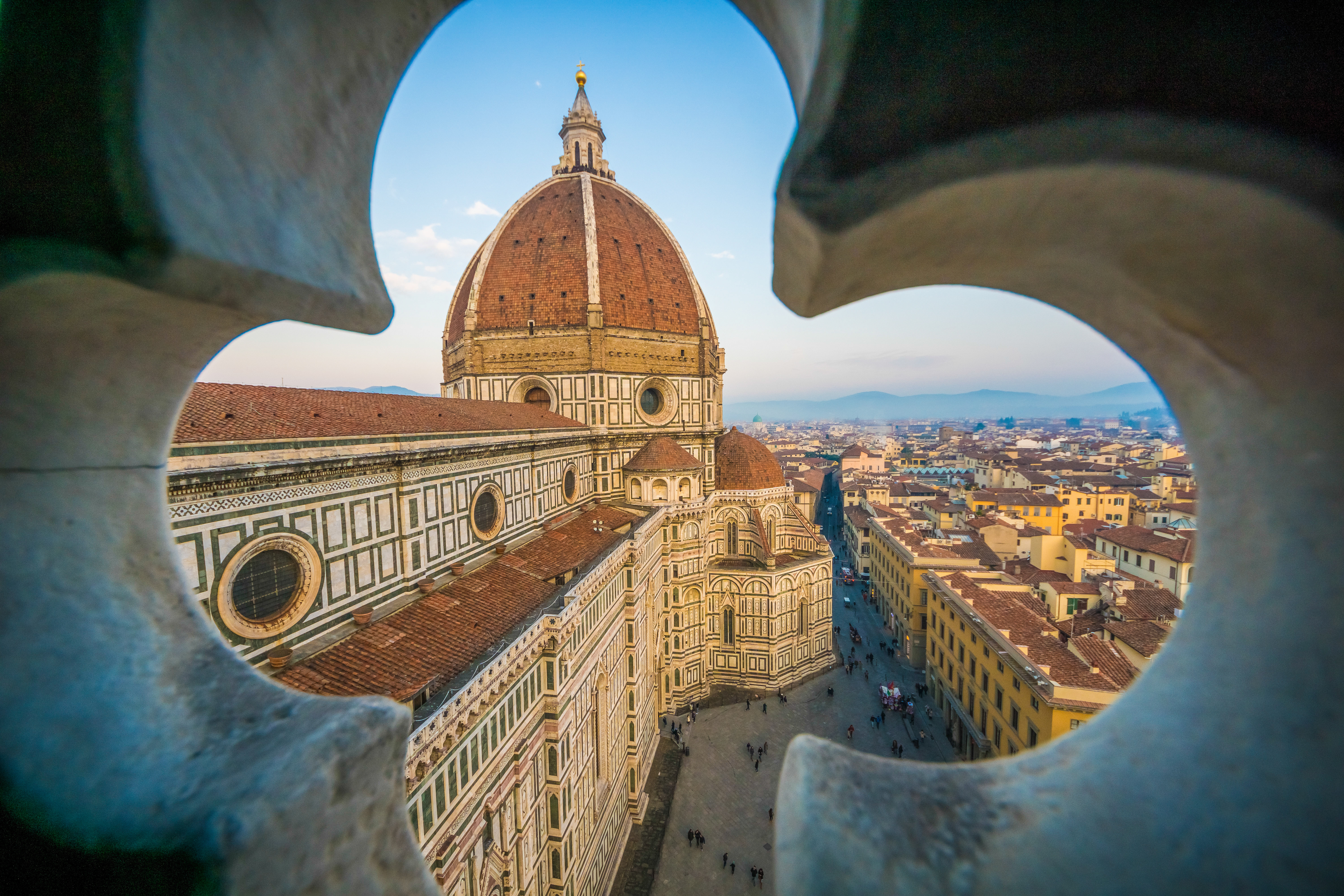
My return to Florence comes at an especially timely moment. International ‘Week of the Italian Language in the World’ is happening in the last week of October. This year’s theme celebrates the relationship between the Italian language and Italy’s creative and economic exports, from design to fashion, technology, engineering, gastronomy, literature and art.
Florence has given the world so much in all of these fields, and its contribution to the language Italians speak today is just as significant.
In the Middle Ages, Italy was not a unified country, and there was no single standard Italian language. People spoke a range of regional vernaculars including Sicilian, Venetian, Lombard, Tuscan and many others, while Latin remained the language of much formal writing and scholarship.
The Florentine poet Dante changed everything when he chose to write his famous work, The Divine Comedy, largely in the Tuscan vernacular – the language people actually spoke – rather than Latin.
Its popularity gave the Tuscan vernacular enormous cultural status and prestige, as did the work of fellow Tuscan writers Petrarch and Boccaccio.
Over the following centuries, scholars increasingly looked to these writers as models for “good” Italian. Florence later became home to the Accademia della Crusca, which played an important role in codifying and standardising the Italian language through its influential dictionary.
I’m fascinated by how languages change over time. They carry knowledge, values, creativity and culture from one generation to the next, and from one country to another, evolving along the way.
I think this gets to the heart of what we do as interpreters: helping ideas cross borders so they can reach new people, spark new conversations, and create change.