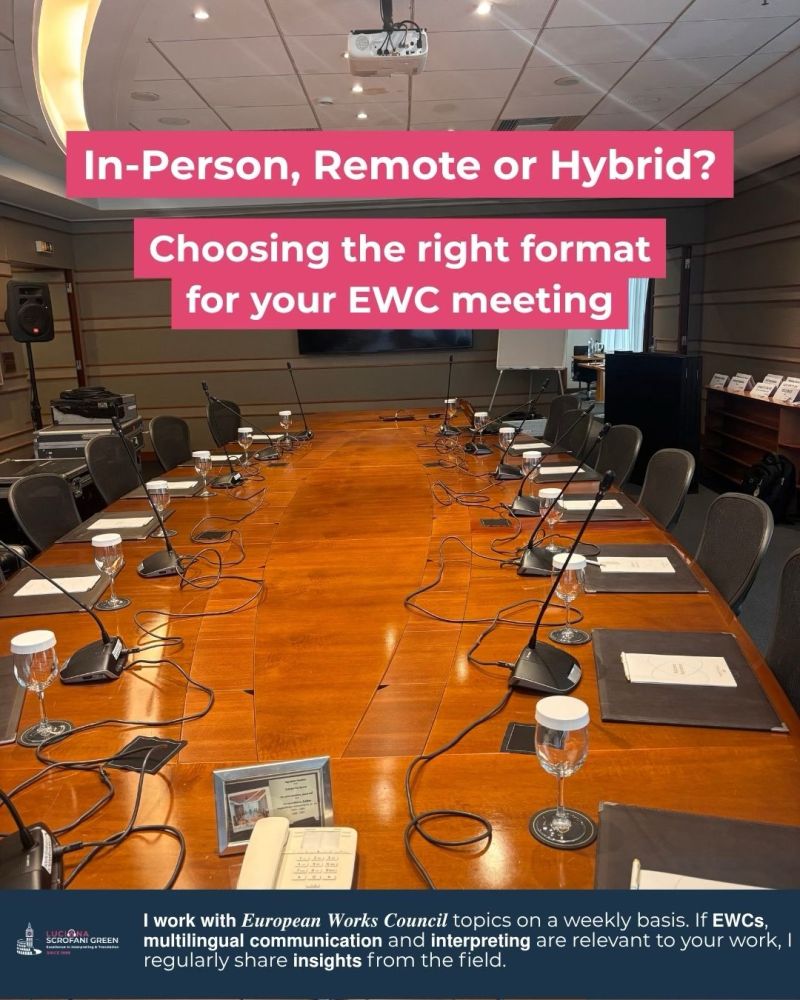
Greetings from Athens 🇬🇷 — where I’m working today and, perhaps inevitably, thinking about European Works Councils and the very different ways we bring people together.
One question that comes up regularly is:
In-person, remote or hybrid?
After years of working with EWC meetings, I don’t think the answer is simply about logistics or cost.
It’s about how you want people to communicate.
The format you choose can affect how easily representatives communicate, how engaged participants are, and how effectively discussions can take place.
🏢 In-person
Best suited to meetings where relationship-building, detailed discussions and informal conversations are particularly important.
Being in the same room can make it easier to read the room, build trust and have those conversations that happen naturally between sessions.
💻 Remote
A practical option when bringing everyone together physically isn’t realistic.
It can reduce travel, simplify logistics and make it easier for representatives in different locations to participate.
But it also requires strong preparation and reliable technology to keep discussions productive.
🔄 Hybrid
Useful when some participants need to join remotely while others are together in person. This is a preferred option for many multinational companies, as it combines face-to-face interaction with greater flexibility and can reduce travel, accommodation and per diem costs for interpreters working remotely.
However, it can be more challenging to ensure that remote participants have the same opportunity to contribute as those in the room.
So before choosing a format, consider:
✔️ What does the meeting need to achieve?
✔️ How much discussion and interaction is required?
✔️ Who needs to participate?
✔️ How important are informal conversations and relationship-building?
✔️ What practical or budgetary constraints do you have?
The best format isn’t necessarily the easiest one to organise.
It’s the one that supports the purpose of the meeting and allows everyone to participate meaningfully.