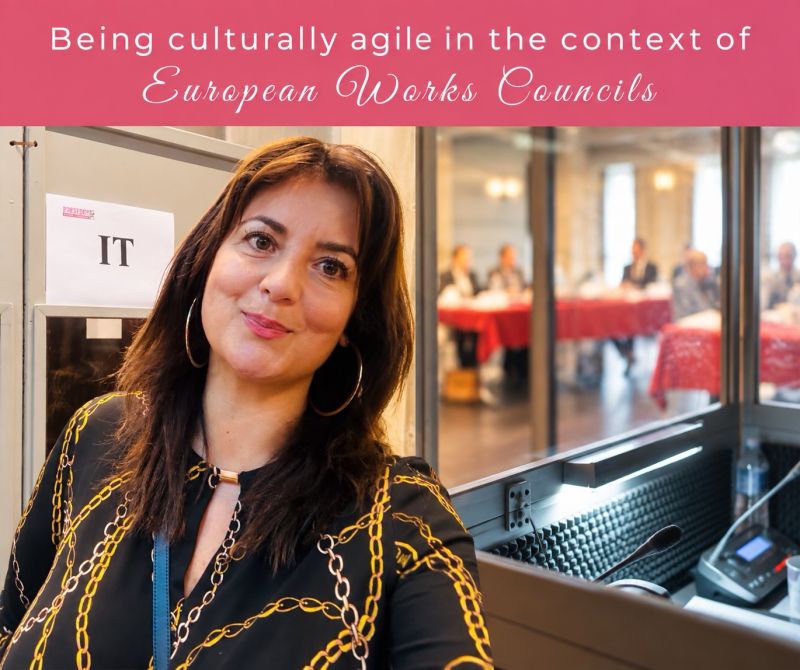
Cultural agility in an EWC meeting isn’t about knowing every cultural rule.
It’s about knowing when to adapt.
Because put 10 or more nationalities around the same table and you’re not just bringing different languages into the room.
You’re bringing different expectations about:
👉 How disagreement should be expressed
👉 Who should speak first
👉 How openly people challenge management
👉 How decisions should be discussed
👉 What “yes” actually means
👉 How much context people expect before making a point
And this can matter more than we realise.
A comment that sounds perfectly straightforward to one person might come across as confrontational to another.
A cautious response might be interpreted as agreement.
A very direct question might be seen as inappropriate rather than constructive.
None of this necessarily means someone is being difficult.
They may simply be communicating in the way that feels natural to them.
That’s why cultural agility matters so much in European Works Councils.
It helps representatives, management and interpreters recognise what is happening beneath the words, and adjust without losing the substance of the conversation.
Because being understood isn’t just about speaking the same language. 🗣️
It’s about creating enough understanding for people from different backgrounds to actually work together.
And in an EWC, that can make a real difference. 🌍